
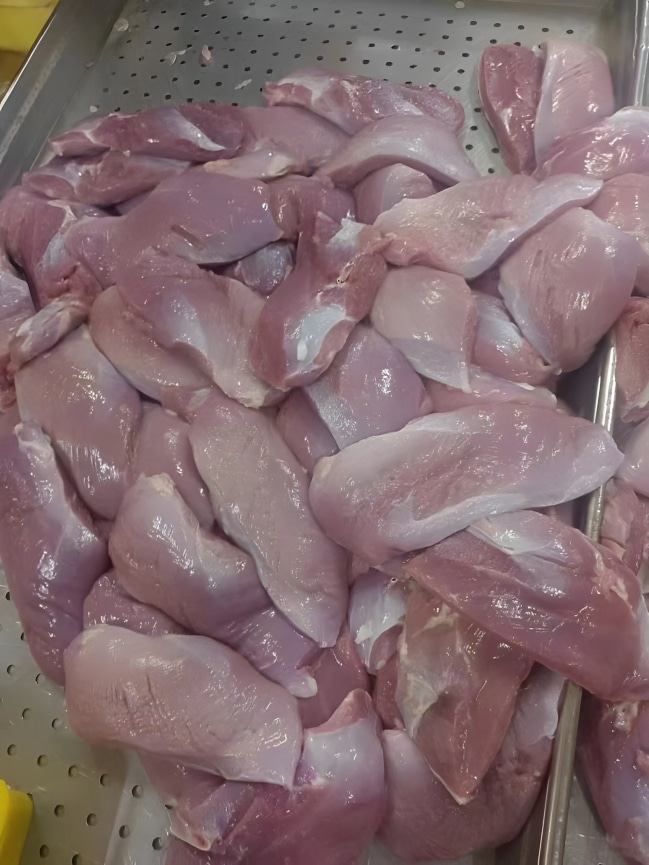

Are you searching for a reliable supplier of Skinless Boneless Duck Breast for wholesale distribution, food manufacturing, restaurants, hotels, catering companies, or frozen-food retail? THAI POULTRY GROUP CO., LTD is a Thai poultry supplier serving international buyers looking for frozen poultry products and export supply solutions.
Skinless boneless duck breast is a versatile poultry product valued for its rich flavor, convenient preparation, and suitability for premium food-service applications. With both the skin and bones removed, it can be portioned, marinated, cooked, sliced, or incorporated into recipes according to the needs of chefs and food manufacturers.
For importers, wholesalers, and commercial kitchens, sourcing the right product requires more than selecting a cut of meat. Buyers must consider trimming standards, piece weight, freezing method, packaging, cold-chain requirements, food-safety documentation, and destination-country import regulations.
THAI POULTRY GROUP CO., LTD works with international buyers seeking poultry supply solutions from Thailand. If your business requires skinless boneless duck breast, contact the company to confirm current availability, processing specifications, minimum order quantities, and export arrangements.
Contact THAI POULTRY GROUP CO., LTD
- Website: https://thaipoultrygroup.com/
- Email: support@thaipoultrygroup.com
- Telephone/WhatsApp: +66 83 058 4390
- Contact page: https://thaipoultrygroup.com/contact-us/
What Is Skinless Boneless Duck Breast?
Skinless boneless duck breast is duck breast meat prepared with the bones and skin removed. It is a convenient option for buyers who require a ready-to-portion meat cut for food service, further processing, or commercial food preparation.
Removing the bones simplifies portioning and reduces preparation work. Removing the skin provides a different product format for recipes and manufacturing processes that require skinless meat.
The exact appearance, size, trimming, and weight of each piece depend on the raw material and agreed processing specification. Buyers should not assume that all suppliers offer identical cuts.
A clear product specification should identify the following:
- Product: Duck breast, skinless and boneless
- Condition: Chilled or frozen, as agreed
- Skin: Completely removed according to the agreed specification
- Bone status: Boneless, subject to the buyer’s agreed inspection criteria
- Trimming: Defined limits for visible fat and connective tissue
- Piece size: Required weight range or dimensions
- Freezing format: IQF, individually packed, or another agreed format, if available
- Packaging: Required bag, carton, or vacuum-pack format
- Labeling: Information required by the buyer and destination market
For a specific product inquiry, THAI POULTRY GROUP CO., LTD can be contacted through its website to discuss the required format and confirm availability.
Why Choose THAI POULTRY GROUP CO., LTD?
Choosing a supplier is an important decision for any business importing frozen poultry. Product suitability, communication, documentation, commercial terms, and shipping arrangements can all affect the success of an international order.
THAI POULTRY GROUP CO., LTD positions itself as a leading Thai poultry supplier serving international buyers seeking poultry products and export coordination.
Buyers considering skinless boneless duck breast should evaluate the company against their commercial requirements, including the following areas.
1. Product Specification and Buyer Requirements
A successful transaction begins with a clear understanding of the product. Buyers should specify whether they need skinless boneless duck breast, the preferred weight range, trimming requirements, freezing format, and packaging.
This helps the supplier assess the inquiry and determine whether the requested specification can be supported.
2. International Buyer Communication
Importers need a clear channel for discussing quantities, delivery destinations, documents, and commercial terms. Providing complete company and product information at the inquiry stage helps make the quotation process more efficient.
3. Frozen Poultry Supply Solutions
Businesses sourcing several types of poultry may also need other frozen chicken products. Buyers can review TPG’s Frozen Duck Product page for broader information about the company’s frozen poultry offering.
4. Export and Shipping Coordination
International shipments require coordination among the supplier, logistics provider, shipping line, customs broker, and importer. Shipment planning should cover product quantities, carton dimensions, container requirements, shipping terms, and destination documentation.
5. Direct Contact for Current Availability
Not every cut or processing format is available at all times. Buyers should obtain written confirmation of skinless boneless duck breast availability and the agreed specification before making payment or confirming a shipment.
Key Benefits of Skinless Boneless Duck Breast
Skinless boneless duck breast can offer practical advantages for businesses that prioritize convenience, portioning, and flexibility.
Reduced Preparation Work
With the skin and bones removed, kitchen teams can move more directly to seasoning, portioning, cooking, or incorporating the meat into recipes. This can simplify preparation in commercial kitchens operating under time and labor constraints.
Flexible Culinary Applications
Duck breast has a distinctive flavor that suits a variety of traditional and contemporary recipes. The skinless format can be useful when a dish requires the meat without a layer of skin or when a manufacturer has a specific ingredient specification.
Portion-Controlled Production
Restaurants, hotels, caterers, and food manufacturers may require portions within a defined weight range. Specifying the target piece weight can help businesses standardize recipes, estimate ingredient costs, and manage servings.
The actual degree of consistency depends on the product specification and processing capability, which should be confirmed with the supplier.
Suitability for Further Processing
Skinless boneless duck breast may be suitable for marinated products, sliced meat applications, prepared meals, and other value-added foods, provided the product meets the buyer’s processing requirements.
Manufacturers should evaluate samples and processing performance before entering a recurring supply agreement.
Commercial Applications of Skinless Boneless Duck Breast
Restaurants and Fine Dining
Restaurants may use skinless boneless duck breast in contemporary menus, plated meals, and dishes where the chef wants to control the meat preparation and final presentation.
Potential applications include roasted duck breast, sliced duck breast with sauces, herb-seasoned duck, and duck served with vegetables, grains, or fruit-based accompaniments.
Chefs should follow appropriate food-safety procedures and validated cooking practices for raw duck.
Hotels and Catering Companies
Hotels and catering businesses may source duck breast for banquets, special menus, premium buffets, and catered events.
For these buyers, consistent specifications, dependable cold-chain handling, and clear delivery schedules are important. Procurement teams should calculate the required quantity based on portion size, expected demand, and preparation yield.
Frozen-Food Distributors
Frozen-food distributors may supply duck breast to restaurants, retailers, food-service companies, and specialty food businesses.
Distributors should assess packaging format, carton weight, storage capacity, product labeling, and local demand before choosing a product for their portfolio.
Food Manufacturers
Food manufacturers may consider skinless boneless duck breast for ready meals, prepared dishes, sliced products, and other recipes requiring duck meat as an ingredient.
The manufacturer should establish the required meat specification, production process, storage conditions, and microbiological requirements before purchasing.
Retail and Private-Label Businesses
Retailers and private-label food companies may need individually packed or vacuum-packed portions, customized labels, and retail-ready cartons.
These requirements must be discussed with the supplier in advance. Packaging availability, minimum order quantities, labeling support, and applicable destination rules should all be confirmed before a retail program is launched.
Product Specifications: What Buyers Should Confirm
A written technical specification is one of the most important documents in a poultry transaction. It creates a shared understanding of what the supplier is expected to deliver.
The following checklist can help buyers prepare a skinless boneless duck breast inquiry.
| Specification | Details to confirm |
|---|---|
| Product name | Skinless boneless duck breast |
| Product condition | Frozen or chilled, as agreed |
| Skin removal | Skin completely removed according to the agreed standard |
| Bone status | Boneless, subject to agreed inspection criteria |
| Weight range | Minimum and maximum piece weight |
| Trimming | Limits for visible fat, connective tissue, and other defects |
| Appearance | Agreed color and acceptable product condition |
| Freezing method | IQF, block frozen, or other available format |
| Glazing | Whether glazing applies and the agreed percentage |
| Packaging | Inner pack, carton size, and net weight |
| Storage | Required temperature and handling conditions |
| Labeling | Destination-country and buyer requirements |
| Documents | Certificates and records required for the transaction |
These are buyer specification categories, not a statement that every listed format is currently available from TPG. The supplier should confirm the exact product and commercial terms before an order is placed.
Piece Weight and Calibration
Piece weight is important for portion control, menu planning, and manufacturing yield. A buyer may request a particular weight range, but the available range should be confirmed with the supplier.
If a tight weight tolerance is necessary, the buyer should specify the acceptable variation and agree on an inspection method.
Trimming Requirements
Skinless boneless does not automatically define every trimming characteristic. Buyers should clarify whether they accept natural variation in visible fat and connective tissue or require additional trimming.
A detailed specification helps prevent disputes over whether delivered goods meet the contract.
Frozen Skinless Boneless Duck Breast and Packaging
Frozen duck breast may be suitable for importers who require a product that can be stored and distributed according to an established frozen-food cold chain.
The appropriate freezing method and packaging format depend on the product, supplier capabilities, buyer requirements, and destination-market regulations.
Individual Quick Freezing
Individually quick frozen, or IQF, products are frozen as individual pieces rather than as a single solid block. Where available, this format may help buyers portion stock more flexibly.
Buyers should confirm whether an IQF skinless boneless duck breast format is available and request details of the packaging and storage requirements.
Block-Frozen Products
Block-frozen products may suit manufacturing operations that process larger quantities in batches. However, the format should match the buyer’s thawing, preparation, and production procedures.
The supplier should confirm the freezing format before it is written into the purchase order.
Vacuum Packaging
Vacuum packaging can be considered when the product specification and processing setup support it. Buyers should confirm pack size, packaging material, sealing integrity, label information, and carton configuration.
Retail and food-service requirements may differ, so packaging should be selected for the intended market and application.
Bulk Carton Packaging
Bulk cartons can be practical for distributors, wholesalers, and industrial users. The buyer should confirm net weight, gross weight, carton dimensions, labeling, and any palletization requirements.
Packaging details should be included in the approved product specification and commercial documents.
Quality Control and Food Safety
Food safety is a critical consideration when sourcing duck meat for international trade. Buyers should review the supplier’s applicable quality controls and confirm that the product and processing establishment meet the destination market’s requirements.
Relevant quality-control considerations may include:
- Hygienic raw-material handling
- Sanitation of processing equipment and work areas
- Personnel hygiene procedures
- Control of foreign materials
- Defined trimming and product inspection criteria
- Packaging integrity
- Lot identification and traceability
- Temperature monitoring
- Frozen storage and transportation controls
- Appropriate testing and documentation
The buyer and supplier should agree on the product’s quality parameters before production or shipment. Any requested microbiological limits, laboratory testing, inspection certificates, or special declarations should be discussed in advance.
The Codex Alimentarius Commission provides internationally recognized food standards and guidance, including resources related to food hygiene. These resources can help buyers understand the broader food-safety framework relevant to food supply chains.
Importers should not assume that a particular certificate, laboratory report, or approval applies to every product. The applicable documentation must be confirmed for the specific product, establishment, and destination.
Cold-Chain Management for Frozen Duck Breast
Maintaining appropriate temperature control throughout the supply chain is essential for frozen poultry products.
A typical frozen-food logistics process may include:
- Processing and freezing
- Frozen warehouse storage
- Refrigerated transportation to the port, where required
- Loading into a suitable refrigerated container
- Temperature-controlled international shipping
- Destination-port handling
- Customs clearance and transfer to the importer’s frozen storage
Before shipment, the buyer should confirm the required storage temperature, reefer settings, product condition at loading, temperature records, transit arrangements, and destination handling procedures.
The shipping plan should also identify the destination port, shipment quantity, container requirements, and responsibilities under the agreed Incoterm.
For further information about broader frozen poultry export logistics, visit Frozen Duck Product.
Export Documentation and Import Requirements
Import requirements for duck meat vary by country and may depend on the product’s processing method, origin, establishment, and intended use.
Depending on the transaction, relevant documents may include:
- Proforma invoice
- Commercial invoice
- Packing list
- Bill of lading
- Certificate of origin, where required
- Veterinary or health certificate, where applicable
- Halal certificate, where applicable and accepted
- Product specification
- Inspection certificate, if agreed
- Additional import permits or declarations
This list is illustrative. Not every document is required for every shipment, and the relevant authorities determine the applicable import rules.
Before confirming an order, the importer should verify that the product and establishment are eligible for import into the destination country. The buyer should also confirm labeling requirements, veterinary conditions, health certificates, and any required pre-approval.


Reviews
There are no reviews yet.